
Nselweni Bush Lodge
Is Nselweni Bush Lodge the same as Nselweni Bush Camp? Yes they are the same place, the same camp in the iMfolozi. Just over the years people have searched different terms, so it kind of stuck..
What is Nselweni Bush Camp? Nselweni Bush Camp is a small, remote self-catering camp perched on a natural terrace overlooking the Black uMfolozi River in the iMfolozi section of Hluhluwe-iMfolozi Park. It is a community-run lodge, established as a joint venture with the surrounding Zululand community and partially funded by the park's conservation levy — meaning your stay directly supports both wildlife conservation and local employment.
How many chalets are at Nselweni Bush Lodge and what are the prices? Nselweni has 10 self-catering two-sleeper chalets accommodating a maximum of 20 guests. Units are divided into three categories based on river view: Full Riverview from R3,000 per night (2 adults), Semi-Riverview from R2,880 per night, and Bush View from R2,700 per night. Units can be booked individually or the entire camp can be taken on exclusive use.
What facilities are inside each chalet? Each chalet has one bedroom with single beds that can be pushed together to form a double, an en-suite bathroom with shower and toilet, a fully equipped kitchen with stove, fridge and kettle, basic cutlery and crockery, an outside dining area with braai/barbecue facilities, and linen and towels are provided. The camp runs on solar energy, generator, and candlelight or lantern — no mains electricity.
Is Nselweni Bush Camp fenced? No. The camp is unfenced — only a partial elephant fence exists around the perimeter. Wildlife moves freely in and around the camp. This is part of the authentic appeal of Nselweni but guests should not walk beyond the immediate vicinity of their unit after dark.
Is there WiFi or electricity at Nselweni Bush Lodge? There is no WiFi at Nselweni. Power is provided by solar panels, a generator, and candlelight — electricity may be restricted at certain hours. This is one of the most genuinely off-grid stays inside any South African game reserve.
Where do I check in for Nselweni Bush Lodge? Check-in for Nselweni is done at Mpila Camp, which is approximately a 35-minute drive away. All activities — game drives, night drives, and guided bush walks — also depart from Mpila Camp. Stock up on food and supplies before entering the park as there is no shop at Nselweni. Limited basics can be purchased at the Mpila Camp shop.
What wildlife can I see at Nselweni Bush Lodge? Nselweni is best known for elephant and white rhino sightings, with regular lion activity in the surrounding iMfolozi thornveld. The Black uMfolozi River attracts hippo and crocodile. Wild dog are seen more frequently in the iMfolozi section than in the Hluhluwe section of the park. Giraffe and warthog are commonly encountered on the access road into camp.
Are children allowed at Nselweni Bush Lodge? Yes, children are welcome at Nselweni. Standard adult rates apply for all guests. Given the unfenced nature of the camp, parental supervision is essential at all times.
How far is Nselweni Bush Lodge from St Lucia? Nselweni Bush Lodge is approximately 95km from St Lucia — around 1 hour 30 minutes via the N2 and Nyalazi Gate into the iMfolozi section of the park. Check in at Mpila Camp before proceeding to Nselweni, which is a further 35 minutes inside the reserve.
Nselweni Bush Lodge
No airport shuttle — self-drive or hire car essential.
Elephant, rhino and lion move along the Black uMfolozi River and are regularly visible from camp. The camp is fenced for elephant only — all other wildlife moves freely around the units. Outstanding riverine birding: African finfoot, white-backed night heron, malachite kingfisher, goliath heron and African fish eagle.
SA Residents: R120 adult · R60 child
Gate fee waived for all overnight guests.
Semi Riverview — R2,880 per night for 2 adults
Bush View — R2,700 per night for 2 adults
All units are 2-bed self-catering chalets with full kitchen and en-suite. Cook provided for group bookings of 5–8 units. Minimum charge for 2 adults per unit.
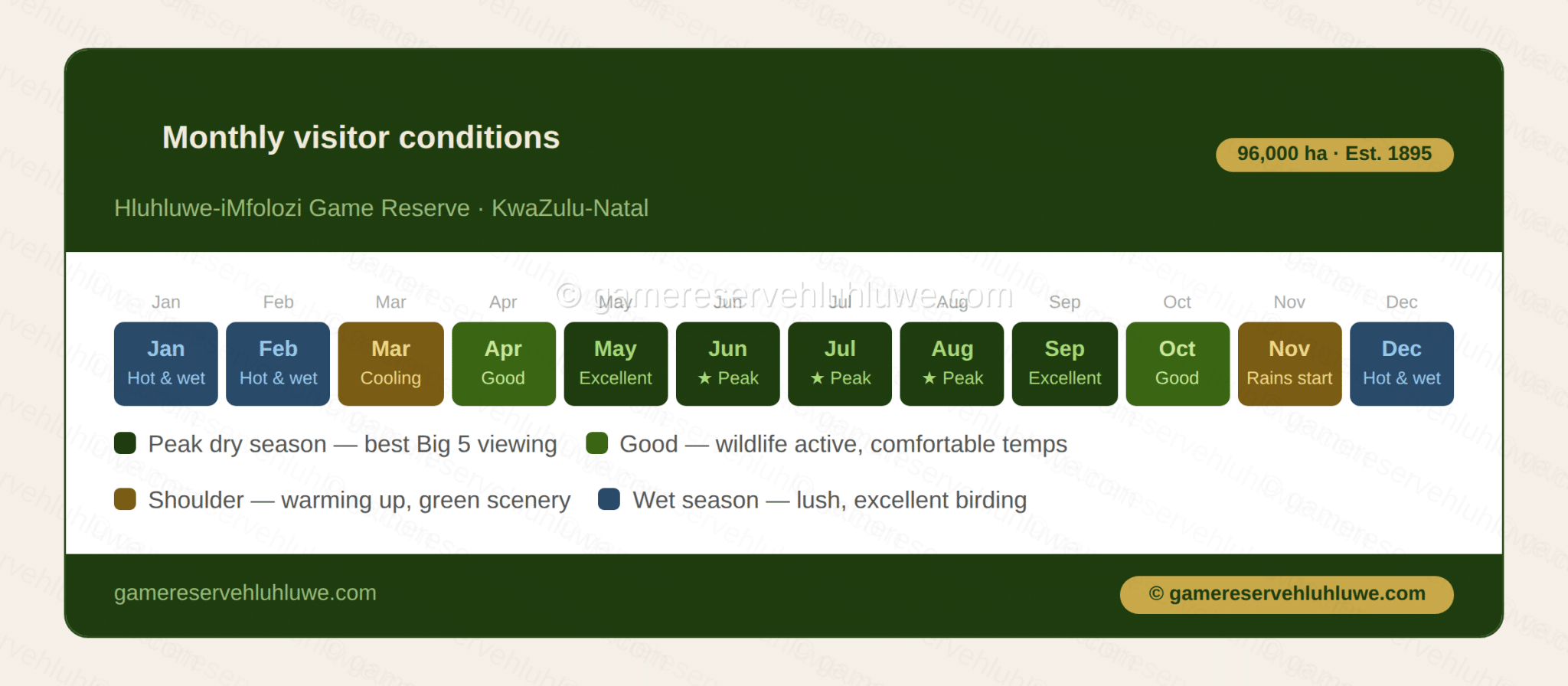
Wildlife and Seasonal Movements
The riverine habitat supports high densities of ungulates and the predators that follow them. Lion sightings increase significantly in winter when the grass drops and game congregates near the remaining water pools in the Black Umfolozi. White rhino graze the surrounding acacia woodlands, a direct result of the recovery efforts initiated decades ago. The camp’s position requires guests to remain within the immediate vicinity of their units after dark.
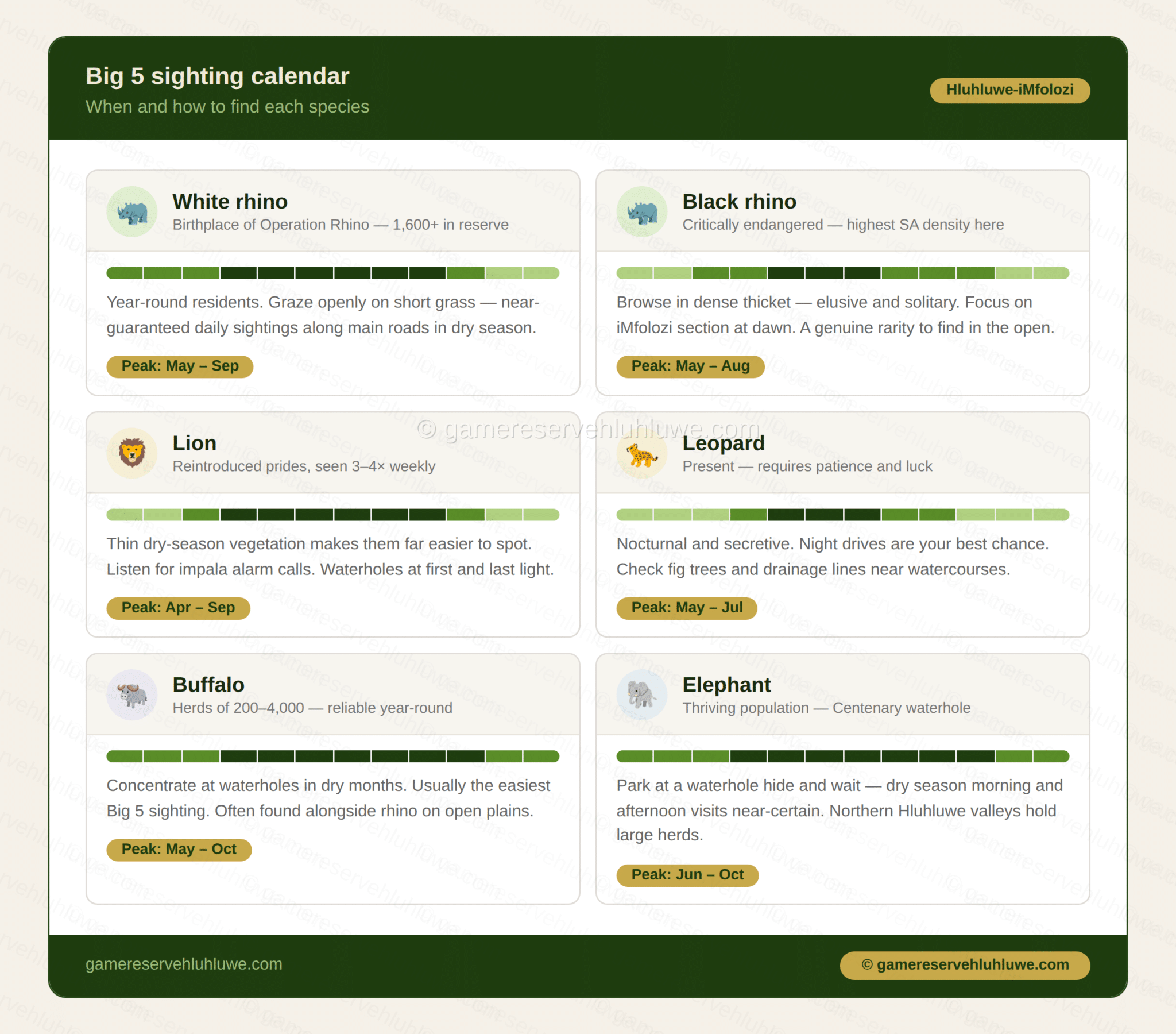
Nselweni Bush Lodge at a Glance- Nselweni Bush Camp sits on the banks of the Black Umfolozi River within the 96,000-hectare Hluhluwe-iMfolozi Game Reserve. Established as a community joint venture, the camp features eight 2-sleeper brick-under walls-with canvas tent roof, chalets. It operates entirely off the grid using solar power and scheduled generators, offering an authentic, self-catering wilderness experience in the southern sector of the park.
Nselweni Statistical Highlights:
-
Reserve Size: 96,000 hectares
-
Camp Capacity: 10 two-sleeper chalets (20 guests total)
- Self-cater Only
-
Power Supply Of Grid: 220v generator (06h00–10h00 and 17h00–22h00)
-
Distance: 35-minute drive from Mpila Camp
Nselweni Accommodation & Facilities:
-
Units: 10 two-sleeper brick-under-canvas roof chalets (20 guests maximum in the camp)
-
Bathrooms: En-suite with shower
-
Kitchens: Private kitchenette per unit (gas fridge and stove)
-
Catering: Strictly self-catering (guests must bring all food, supplies, firewood must be bought in the park ONLY, and drinking water)
-
Wildlife Viewing Communal Areas: Central lounge with seating for 20
-
Views: Private verandas overlooking the Black Umfolozi River


Nselweni Bush Camp: The Sublime Isolation on the Black Umfolozi
The Black Umfolozi River cuts a wide, sandy channel through the southern section of the reserve. From the raised wooden deck of a brick-under-canvas chalet at Nselweni, you watch the water level drop in the dry season. Elephant herds cross the shallows at dusk, their movements dictating the rhythm of the evening. The camp operates entirely off the grid. When the 220v generator cuts out at 22h00, the sounds of the iMfolozi wilderness take over.
The Legacy of the iMfolozi Wilderness
This southern sector of the 96,000-hectare reserve carries the weight of a 130-year conservation lineage. Established in 1895, the park became the staging ground for Operation Rhino under Dr. Ian Player. The wilderness trails originated here in the 1950s, fundamentally changing global conservation models. Nselweni places guests directly within this historical landscape. The perimeter is fenced only for elephants. Smaller game, including predators, move freely through the camp boundaries at night.
Nselweni Bush Camp Accommodation and Self-Catering Facilities
Eight two-sleeper units line the riverbank, offering accommodation for a maximum of 16 guests. Each chalet features an en-suite bathroom with a shower, and a private kitchenette equipped with a gas fridge and stove. The camp remains strictly self-catering. Guests bring their own supplies, firewood, and drinking water for the duration of their stay. A central communal lounge offers seating for 20, though the river view from the private verandas commands more attention.
Camps Booking Configurations and Group Access
Individual chalets accommodate couples seeking isolation in the bushveld. Groups can book the entire camp exclusively, securing all eight units. Exclusive bookings include access to a central kitchen and the services of a camp cook. The solar panels and scheduled generator run strictly between 06h00 and 10h00, and again from 17h00 to 22h00.
Navigating to Nselweni from Mpila Camp
The drive to Nselweni requires navigating 35 minutes of dirt roads from Mpila Camp. The route descends toward the river valley, passing through dense acacia scrub and open clearings. Dust settles on the vehicle as you navigate the final tracks toward the camp entrance. There is no phone signal here. The isolation is intentional, designed to replicate the original wilderness trail experience.

Comments are closed.